See the preserves in a new way while kayaking
Have you ever seen a body of water at one of the preserves and thought, “Huh, that’s a really nice place to be on a boat.” Well, now you can try that out!
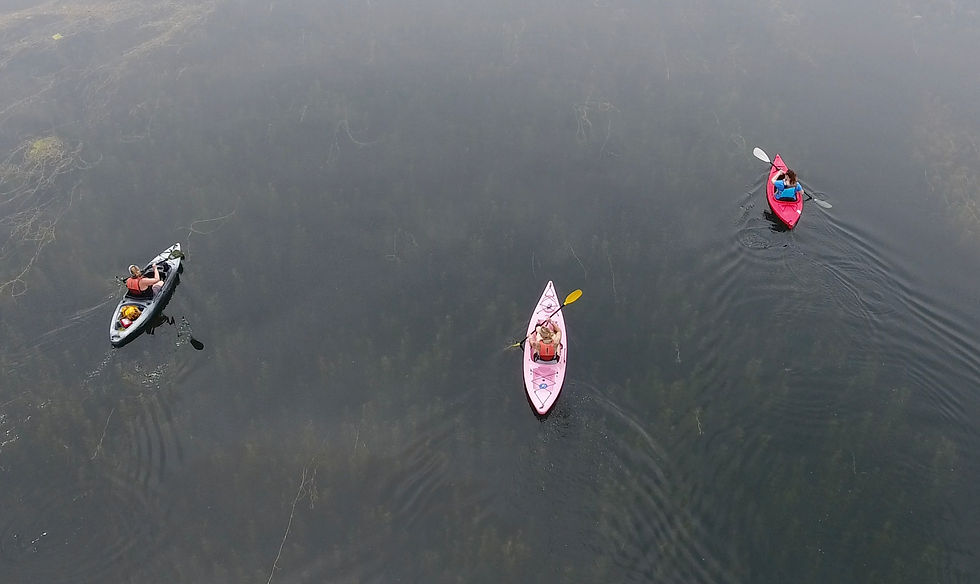
Some of the preserves have different opportunities for you to try kayaking. Never heard of it? Well, let’s get you out from under that rock and learn a bit about it before you go sailing on the high seas of Lake Chaminwood or another preserve.
Where do kayaks come from?
Kayaks are thought to be at least 4,000 years old! They were originally developed by Canadian and Alaskan indigenous Inuit people who used the boats for practical things like hunting for food and other resources.
The word “kayak” means “hunter’s boat,” and the original kayaks were constructed from seal and animal skins stretched over wood or a whalebone frame.
Kayaking today involves way less work for most modern people. Kayaks now are made from lots of different materials like plastic, carbon fiber and fiberglass. They can even be inflatable! Luckily enough, you can buy one from the store or rent them from some Forest Preserve locations, including Monee Reservoir, Lake Chaminwood Preserve and Whalon Lake.
Be prepared

Before you jump in a kayak and start paddling, there are some things you should do to prepare yourself.
Make a plan. Where are you going? How far? How long will it take? Check the weather for the day you are going to be on the water and have a way to check the weather when you are on your boat. Let someone know your plan and check in with them when you get off the water.
Check water conditions. If you are kayaking on a river, storms can make the river flow too quickly to safely kayak. Flooding can also cause dangerous conditions.
Wear the right clothes. In the summer, you want to wear clothes that can protect you from the sun and keep you cool. Wear quick-drying synthetic clothes and avoid cotton when possible. Secure shoes are also important. Water shoes are ideal; try your best not to wear flip flops.
Bring the right supplies. Water, a phone or radio to contact people in case of an emergency, sunscreen and snacks if you are going to be on the water for a longer period of time are all super important!
Wear a personal flotation device or a life jacket. Safety is always priority No. 1, and nothing keeps you safer on the water than a life jacket. In Illinois, a properly fitting life jacket or life vest must be available for all people aboard a watercraft, and kids younger than 13 must wear a life jacket while on any watercraft less than 26 feet in length. In addition to a life jacket, you can also bring other safety gear with you like a bilge pump to pump out any access water, a rope to tow anyone who is having issues and a paddle float, which can help you get back into your boat in case you flip it.
What do you do when you are on a kayak?

Some people like to float in their kayak, while others like to get far away as fast as they can. Here are some other things you can try when you are out on the water.
Look for birds. A lot of birds are more easily seen when you are on the water. Bring some binoculars and see the different types of birds who call the water their home.
Fishing. A lot of anglers find it is more fun and you can get to some fish hiding spots easier when you are on the water.
Look for other wildlife. Other wildlife that you can see while kayaking could include turtles, dragonflies, water snakes and deer! Many animals come to the water for hydration or to cool off.
Relax. Many people enjoy the feeling of being on the water while enjoying the sights and sounds nature has to offer, so relax and see what new part of nature you can experience.
Nature photography. Bring your camera and take photos of all the beauty nature has to offer.
Camping. Some folks like to take their kayak out with all their camping gear and kayak to a new camping spot.
I’m ready! Where do I go to kayak?

In the summer, the Forest Preserve offers Kayak Kollege programs where you can learn the basics of kayaking before you head out on your own! But if you are ready to hit the water, you can rent kayaks at the following locations:
Lake Chaminwood Preserve: From April 1 to Oct. 31, you can rent kayaks here from a self-serve rental station operated by Rent.Fun. The cost is $25 for the first two hours and $15 for each additional hour. Rentals include a kayak, paddle and life vest.
Monee Reservoir: You can rent kayaks here from May 1 to Sept. 30. The fee is $15 per hour or $35 for a half-day. Rentals include a kayak, paddle and life vest.
Whalon Lake: Kayaks rentals are offered by The Forge at Whalon Lake. Current costs and hours can be found on The Forge's Whalon Lake Kayak Rentals website.
Remember to have fun and stay safe. We hope to see you on the water!


