Seagulls do work as nature's cleanup crew
Seagulls are a common sight near waterways here and afar, living on every continent on Earth. We often see these birds soaring overhead, their familiar call can quickly alert us to their presence.

Because they are common and familiar, we often don't give them much thought. Unless, that is, they are invading our space, something they are known to do. However, these intelligent and adaptable birds thrive while living alongside humans, and like all animals, they are a key part of the ecosystems in which they live.
There's a lot of them
A seagull is not a specific species of bird. Instead, it's a term used for many different gull species that belong to the Laridae family of birds. The birds that are collectively referred to as seagulls include more than 40 different species in all.
Words to know
Adaptable: Able to adjust to new conditions.
Depression: A sunken spot; lower than the surrounding surface.
Unsanitary: Not sanitary; unhealthy or unhealthful.
Because there are so many different species in the seagull family of birds, it can be hard to define them. Many of the birds we are most familiar with here in Will County are predominantly white or light gray with accents of dark gray, black and more, but not all are. Some are black or gray with lighter colored accents. Generally, though, seagulls are stocky birds with long wings, hooked bills and webbed feet.
Illinois is home to 13 gull species. The most commonly seen gulls in Illinois are the herring gull and ring-billed gull. They are the birds most people think of when they think of seagulls. Other gull species found in the state include the Bonaparte's gull, California gull, Franklin's gull, laughing gull and black-legged kittiwake.
They are true scavengers
Think about where you usually see seagulls. Aside from lakes and other waterways, parking lots probably come to mind. Who hasn't seen a seagull circling over a Walmart or McDonald's parking lot? When you consider that these birds are scavengers, this makes sense. Those vast expanses of asphalt are a good place to find left-behind food and even garbage.
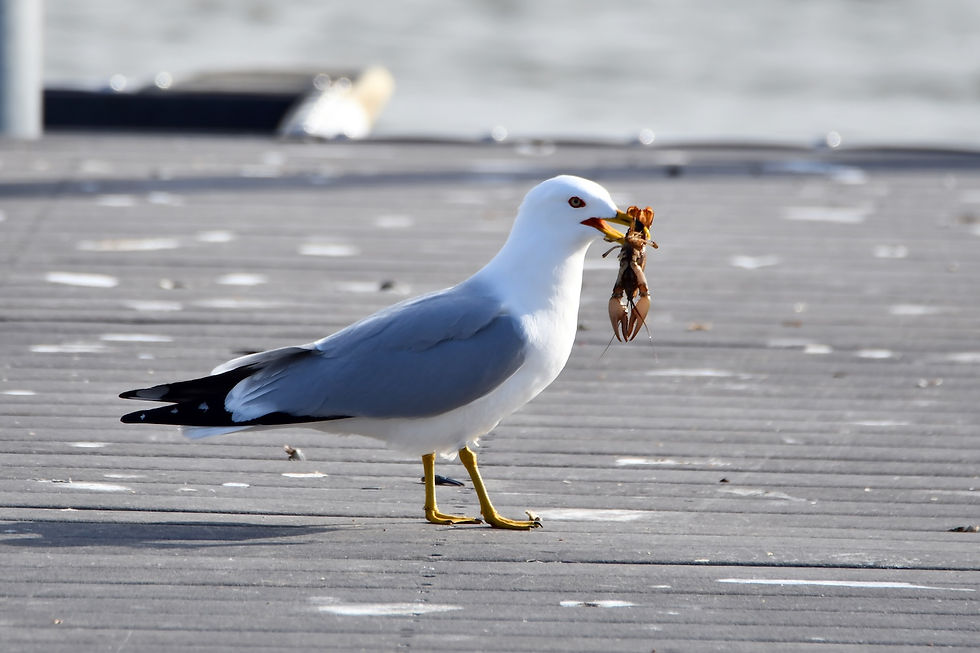
Birds that are scavengers eat garbage or carrion. In the case of gulls, trash is a common food source, and that includes food scraps left behind by us. Besides French fries, sandwiches and other crumbs, seagulls also eat a lot of small fish as well as crustaceans, mollusks and insects. Because they can eat just about anything, they will also graze in recently plowed fields and hang around seafood processing areas.
They are water lovers
Although we often see these birds doing the bird version of dumpster diving over land, they are at home on the water. Locally that means around lakes and rivers, but you'll also see them in large numbers along coastlines.
While seagulls are primarily water birds and often hunt for food in the water, they typically don't stray too far from land. A few species will go far out over lakes and oceans, but most will stay within sight of land. Similarly, a few species will travel far inland to scavenge for food, but most stay close to water.
They nest on the ground
Like many other birds we commonly see around water, seagulls are ground nesters. Our most common local species, the ring-billed gull and the herring gull, both create nests in shallow depressions they form in the ground. Ring-billed gulls will nest on sandy, rocky or soil surfaces near freshwater. They often look for spots that are hidden by vegetation. Herring gulls will usually form their nests in soft soil or sand, often next to rocks and logs to protect them from wind.
The males and females of both species help build the nest. Ring-billed gulls typically lay two to four eggs, while herring gulls will lay one to three. The eggs hatch after about a month of incubation. Within a few hours or days of hatching the young birds are able to move about, but they will stay around the nest for a while longer until they are able to take care of themselves.
They can be pesky
Gulls do important ecosystem work by cleaning up the environment of waste, but as anyone who has lost a sandwich or a French fry to one can attest, they can be a little aggressive when they are looking for food. They can also pose problems because they often gather in large numbers around waterways, creating an unsightly and unsanitary mess with their waste.
The best way to avoid seagulls from becoming a bother is not to invite them by providing easy access to food waste. That means securing lids on garbage cans and keeping waste covered. In large public spaces where the gulls have become a nuisance, officials have had success using sheepdogs and raptors to scare off the gulls. The birds aren't harmed this way, but they relocate to avoid the perceived threats.
If seagulls are causing problems around your home, there are a few tricks you might. First, they seem not to like owls, hawks and coyotes, so adding decoys around your property might help. Other ideas include adding shiny tape or mirrored objects around your yard because birds don't like reflective surfaces. You can also add spinners like pinwheels and objects that bounce in the wind.


