From egg to beetle: A ladybug's transformation
Ladybugs are a very recognizable beneficial insect. Have you ever thought about what this insect looks like when it is younger? The answer might surprise you.

When someone says the word metamorphosis, what do you think of? A monarch butterfly? A tadpole growing into a frog? How about a luna moth turning from a chunky caterpillar to a beautiful moth? Maybe we could start thinking of ladybugs when someone mentions metamorphosis!
A ladybug starts its life as an egg hidden under a leaf. It is just one in a cluster of five to 30 bright yellow-orange eggs. They will remain in their egg for about a week. The female ladybug strategically laid her eggs on a plant that will have plenty of prey for her babies to eat once they hatch from their eggs.

These newly emerged ladybug larvae have long bodies and bumpy exoskeletons. They can be black with brightly colored stripes and spots.
Words to know
Beneficial: Producing good results of helpful effects.
Signature: Closely associated and identified with someone or something.
Strategic: Relating to or marked by strategy.
Vicious: Dangerously aggressive.
Ladybugs are fierce hunters. They will gobble up 350 to 400 aphids or mites in the first stage of their life. If there aren't enough aphids for the freshly hatched larvae to eat, they will eat other ladybug eggs!
Lots of eating means lots of growing. Larvae ladybugs will eat until they are too big for their shell, then molt. The ladybug goes through this process four times within a month until they are ready for the big transformation into adulthood.

Like a butterfly becoming a chrysalis, the ladybug begins its pupal stage. They attach themselves to a leaf, and while it may look like this ladybug is just sitting there, like a crumb on a leaf, an amazing transformation is happening inside. Special cells called histoblasts break down their larval body then re-create themselves, building the adult body.
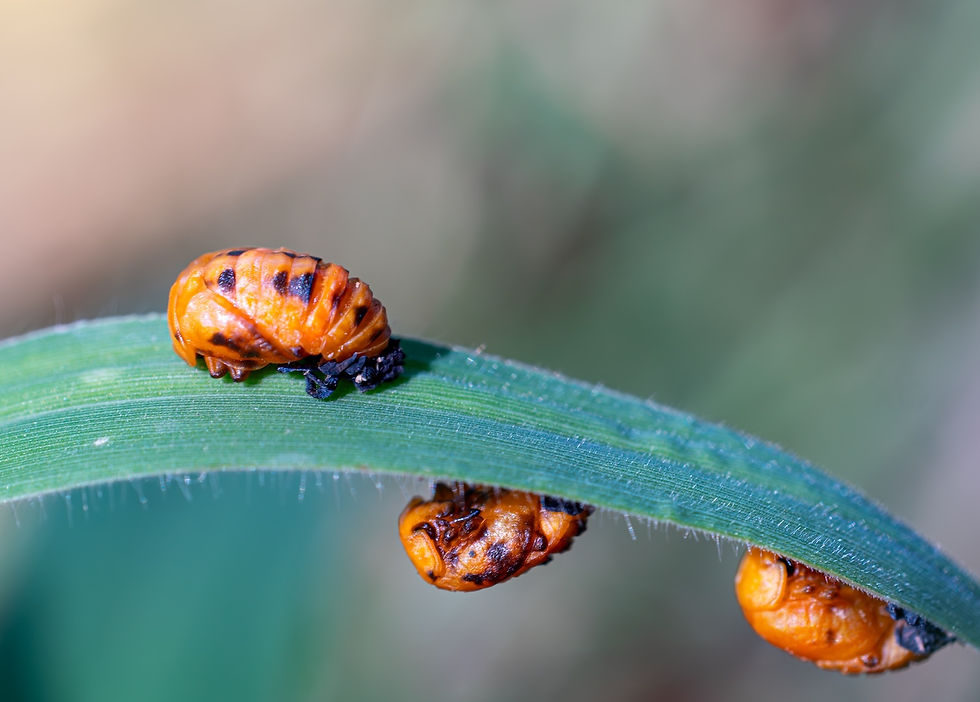
About two weeks later, the soft, pale-yellow adult emerges from its pupal stage. Soon their exoskeletons harden and develop their dark red color and signature spots we all know and love. Even though their entire bodies have transformed to a new shape, size and color, their vicious hunger for soft-bodied insects like aphids and mites remains the same.
Keep your eyes peeled for plants with plentiful aphid populations. Then take a closer look. Now that you are familiar with the different stages of the ladybug lifecycle, will you be lucky enough to "spot" a ladybug before it gains its signature spots?


