Moon illusion: How the moon plays a trick on you
When the moon hits your eyes, like a big pizza pie, that’s an illusion!
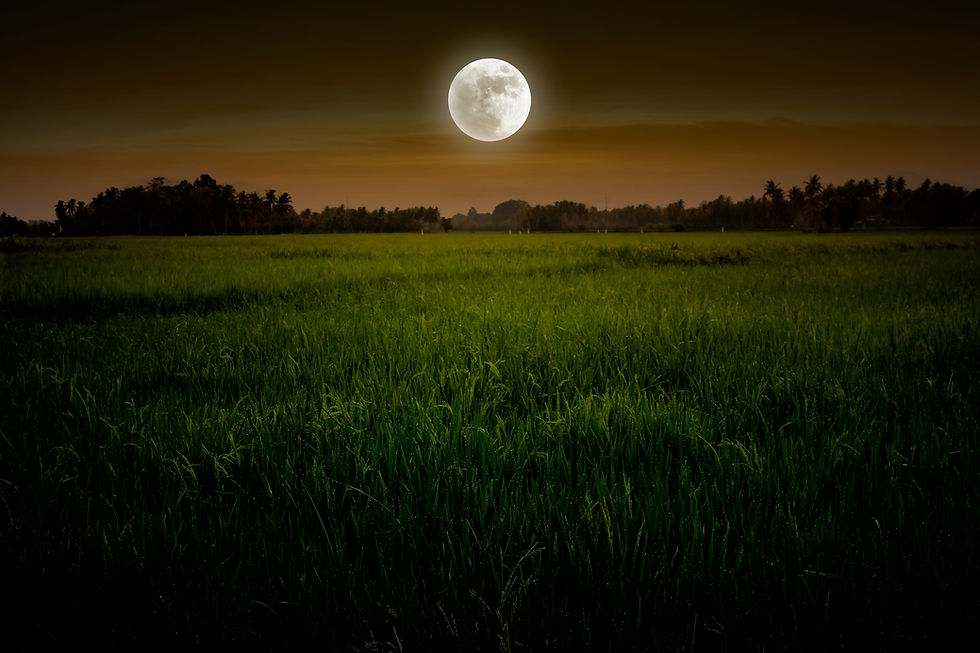
Have you ever looked up at the moon and thought, “Huh, that looks way bigger than normal.” You are not alone! The moon is always the same size and width when we look at it, but there is an illusion that plays tricks on our eyes when it is closer to the horizon.
Why does it look so large?
Scientists have known about this illusion for a very long time, but no one really knows why. There are some theories, though. One theory is that the objects in front of the moon, like buildings or trees, can make it seem like the moon is larger.
Words to know
Horizon: The line in the distance where the earth or sea meets the sky. Illusion: Something that tricks your eyes, senses or mind. Foreground: The part of the picture or view that is closest to the viewer. Atmosphere: The layer of gases surrounding Earth or another planet.
There is also another illusion called the Ponzo illusion, in which objects in the foreground seem smaller because of the way our brains think about
distance. Take a look at the illusion below.

Even though lines A and B are the same length, the lines around it plus how “close” line B is to you as the viewer and your mind all make you think those lines are not the same length. How weird!
Test the illusion yourself!
Don’t believe us? Go outside and take a picture of the moon when it is low on the horizon and looks larger. Then wait awhile and take another picture of the moon from the same spot, using the same zoom.
What were your results? Does the moon have the same width in both pictures?
Does the moon look different at other times?
Yes! The moon is a chameleon and can change color depending on how it feels. Not really, but the moon does appear to us as different colors on occasion.

Sometimes the moon is red, like during a total lunar eclipse. What happens is some of the sun’s light passes through our atmosphere and reflects off the moon. However, not all wavelengths of light make it that far. Because red and orange have the longest wavelengths, they are the ones that make it through earth’s atmosphere.
Think of it like a rock on the shore of the ocean or lake. The waves that make it around the rock are the larger ones. The smaller ones get stopped by the rock.
Sometimes the moon can also appear yellow for a similar reason. When it is low, near the horizon, the moon’s light travels through a thicker layer of Earth’s atmosphere. This makes it harder for the colors with shorter wavelengths (like blue and purple) to travel this far.
Where is the best place to look at the moon?
Luckily, you can see the moon from your backyard on a clear night. But the best place to see the moon is a place with less light, like one of our forest preserves!
The preserves usually close at sunset, but naturalists lead evening programs throughout the year. You can check for upcoming evening programs on our Event Calendar. Don’t forget to bring your camera!


