How do beetles protect themselves? In so many ways
Updated: Jul 24, 2025
Beetles are tiny little animals that live in a great, big world. They deal with predators that want to make them the first item on the lunch menu and bigger creatures that can simply crush them while walking overhead.

So how are these insects able to survive? With the help of many different adaptations. Let's take a look.
An armored shell
Where is your skeleton? On the inside of course. It helps us keep our shape. Beetles use their skeletons for the same thing, but their skeletons sit on the outside. This hard covering is called an exoskeleton, and it literally means “outside skeleton.” It acts as a shield for their bodies, providing support and protection. In fact, the diabolical ironclad beetle can survive being run over by a car, all thanks to its incredible exoskeleton!
Beetles’ exoskeletons are made up of a material called chitin. Other insects, crabs, lobsters, shrimp, spiders and ticks also have exoskeletons made from chitin. While the exoskeleton is tough and stiff, it does have joints, or bendable sections. This lets beetles move easily. They also have small breathing holes called spiracles.
As they age, beetles’ insides grow, but their exoskeletons do not. When their insides get too big for the exoskeleton, the exoskeleton splits open and falls off. This is called molting. Then the body forms a new exoskeleton around it. However, during the time the exoskeleton is growing, the beetle has no protection.
Chemical warfare
Some beetles excrete stinky smells to keep predators away. Bombardier beetles go one step further: They squirt boiling poisonous chemical spray from their abdomens. These beetles produce two chemicals — hydroquinone and hydrogen peroxide — that are stored separately in their bodies.

When threatened, the bombardier beetle squeezes its muscles, forcing both chemicals plus water and enzymes together into a mixing chamber. This violent chemical reaction creates heat, almost to the boiling point of water. They turn the tips of their abdomens around and shoot the hot, poisonous chemicals at any attackers! When bombardier beetles were fed to frogs in a scientist’s lab, the frogs vomited them out and the beetles survived!
Click, click, boom!

Click beetles startle predators by snapping the first part of their thorax against the second part while on their backs. This motion propels their bodies up high in a random jump. Plus, it makes the great clicking noise they are named after.
Playing dead
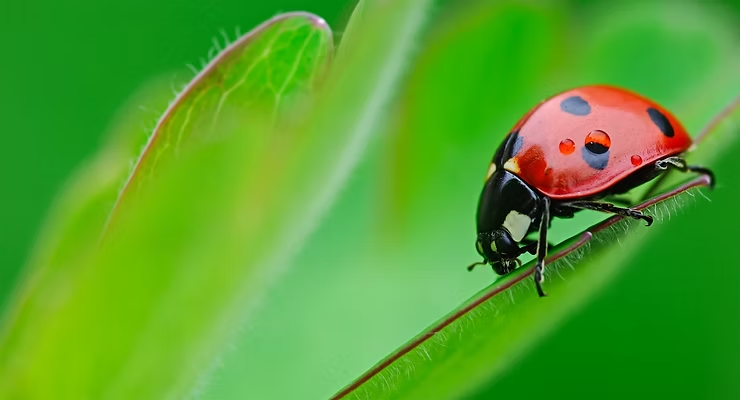
Opossums aren’t the only animals out there that play dead to trick predators. Lady beetles (aka ladybugs) pull up their legs, looking almost like a turtle, and release a little bit of blood from their legs. This is called reflex bleeding. The bad smell from the reflex bleeding and the look of death is enough to keep hungry animals away.
Red means stop
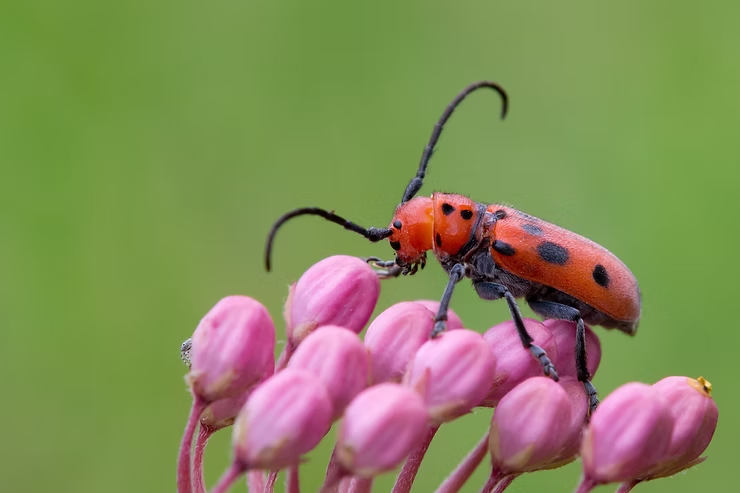
In nature, red — and other bright colors — is usually a warning for those looking for a snack. It says stay away! This is certainly true for red milkweed beetles. They eat milkweed, which is toxic to most animals. The toxins in milkweed are completely harmless to milkweed beetles and they stay in their systems, making them poisonous and bad tasting to predators. Yuck!
Beetles are just incredible! Next time you are outside at a park, a forest preserve or in your own backyard, peek around the plants and trees or along the ground to find them. As you do, can you tell how they are defending themselves?


