Fun after dark: Explore the night sky
As spring stretches into summer in Will County, the days grow longer and longer. It can be easy to forget about the magical world that emerges in the sky once the sun goes down!
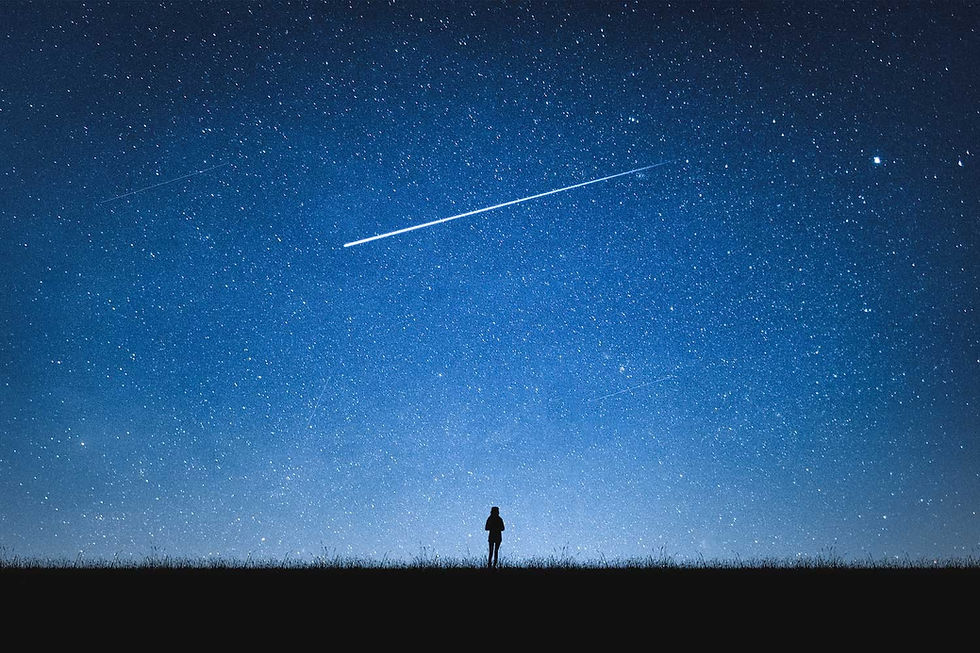
With a little curiosity, you can begin exploring the universe right from your backyard. The best part about stargazing? You don’t need a telescope! All you really need are your eyes, a little patience and a clear night.
Words to know
Asterism: A group of stars that form a pattern within a larger constellation.
Circumpolar: Visible above the horizon at all times of the year. Constellation: A group of stars that forms a picture or pattern in the night sky.
Nocturnal: Being active and awake at night.
Retina: A thin, light-sensitive layer of tissue at the very back of the eye.
How to get started
It’s easy to become a stargazer. Here are a few tips and suggestions.
Find a dark, clear spot away from porch lights, streetlights or anything that could block your view of the stars.
Give your eyes time to adjust. It takes our eyes about 15 to 20 minutes in the dark to be able to see more stars. As your eyes adjust, listen for the sounds of nocturnal animals.
Get cozy! Bring a blanket or chair so you can relax and look up comfortably.
Protect your night vision. If you’re on the move at night, use a red flashlight (or cover a flashlight with a red sticker or paper). The human eye is less sensitive to red light, allowing the rods in your retina (which handle low-light vision) to remain functional.
Use some helpful tools. There are dozens of free mobile stargazing apps that are very user-friendly! Try a few and see which you like best. Don’t be afraid to use an app to help you get oriented and locate constellations, star clusters, planets and more!
What to look for in May
Once your eyes adjust and you get comfortable, look overhead to discover some wonderful characters in the sky!
Meet Ursa Major (and the Big Dipper)

This constellation is circumpolar in the northern hemisphere, which means we can see it in Will County’s night sky all year long! One of the most recognizable asterisms, or star patterns within a larger constellation, is the Big Dipper.
The Big Dipper looks like a giant ladle in the sky, and the “pointer stars” at the end of the dipper’s bowl point straight to the North Star, or Polaris. Because of this, the Big Dipper has been used for navigation for centuries.
Many cultures have created stories about Ursa Major. In some Native American traditions, the stars are seen as a great bear being chased across the sky by hunters. In Greek mythology, the constellation represents Callisto, a beautiful nymph that was transformed into a bear by Hera after discovering her husband, Zeus, admired her. And for Black Americans escaping slavery using the Underground Railroad, the Big Dipper within Ursa Major represented “the Drinking Gourd,” a symbol of direction and hope, pointing north to freedom.
Look for Leo the Lion

High in our evening sky in May is Leo, a constellation representing a lion. This constellation is often identified by a curved pattern of stars that look like a backwards question mark. This makes up the lion’s head. The brightest star in Leo is Regulus, which marks the lion’s heart. Once you spot its shape, it becomes easier to imagine Leo as a resting lion stretched across the sky.
In ancient Greek mythology, Leo is connected to a powerful beast known as the Nemean Lion. In this story, the Nemean Lion’s golden fur couldn't be pierced by weapons, making it nearly impossible to defeat. The hero, Hercules, was eventually able to overcome the lion using his incredible strength and determination. Now this constellation serves as a reminder of courage and perseverance.
Find your own story!

Stargazing isn’t just about finding constellations! It’s about using your imagination as you look at the night sky, just as millions of people have before you.
Try drawing some shapes you see in the stars. You can even create your own sky story about animals, heroes, magical creatures or whatever else you can think up! Share your stories and discoveries with your friends and family.
Stargazing connects us all to something much bigger. When you look up at the night sky, you’re joining a long line of explorers, scientists and storytellers who learned so much from their curiosity.
So, grab a blanket, head outside and look up! You could even spend the night in one of the Forest Preserve District of Will County campgrounds to observe the night sky. Who knows what stories you’ll discover?