A local spin on a classic Christmas carol
- Dec 12, 2025
- 5 min read
One of the best things about wintertime is getting cozy and enjoying some classics — hot chocolate, fuzzy blankets and listening to the comforting sounds of holiday songs from years ago. You might know the song “12 Days of Christmas,” in which the singer of the tune is the recipient of many, many presents from their true love.

While we don’t know the intentions of the gift giver, we have read that the gifts might not have been the literal gifts mentioned in the song, but all birds! The five golden rings? Ring-necked pheasants. Nine ladies dancing? Think of any bird in the sky!
Words to know
Courting: To try to attract a mate.
Extirpated: To root out or destroy completely.
Melodic: Of, having or producing melody.
Plumage: A bird’s feathers collectively.
Are all of the presents birds? Or just the ones that are obviously birds, like the two turtle doves? Either way, we noticed that the feathered friends mentioned are from England, where the song originated in about 1780. So we decided to put a local spin on the classic Christmas carol lyrics.
Original: On the first day of Christmas, my true love gave to me: a partridge in a pear tree.
This refers to the red-legged partridge or the gray partridge. Illinois is not home to many similar species. The closest was the ruffed grouse, which is now extirpated but called this state home 150 years ago. For this gift, we chose the northern cardinal, a “purdy, purdy, purdy” bird whose bright red plumage can easily be spotted this time of year!

New: a cardinal in an oak tree.
Original: On the second day of Christmas, my true love gave to me: two turtle doves.
If you just took a quick glance, you might confuse the European turtle dove with our local mourning doves. Roughly the same in size and population, the turtle doves have slightly more details on their feathers. However, there are more than 300 species in the Columbidae family that can be commonly referred to as “dove.” Which would you choose?

New: two mourning doves.
Original: On the third day of Christmas, my true love gave to me: three French hens.
The farm chickens that come to mind with the word “hen” were animals brought over by European settlers. The greater prairie chicken lives in the prairies of Illinois. As their available habitat shrinks, so does their population. Seeing a bunch of these native wild birds would be a great gift indeed!

New: three prairie chickens.
Original: On the fourth day of Christmas, my true love gave to me: four calling birds.
Today we sing “four calling birds,” but an original word might have been “colly,” meaning black. The European blackbird is credited with being the fourth gift. However, anyone who has visited the forest preserves in spring and summer knows that the red-winged blackbird can be the loudest bird around with their “conk-a-REEEEE” trills.

New: four red-winged blackbirds.
Original: On the fifth day of Christmas, my true love gave to me: five golden rings.
The common goldeneye doesn’t need jewelry to be fashionable — they have bright yellow eyes! Males appear mostly black and white. Females have brown heads and gray back and wings. Keep a (golden) eye out for the males; they show off by stretching their head against their back and then popping their head forward.
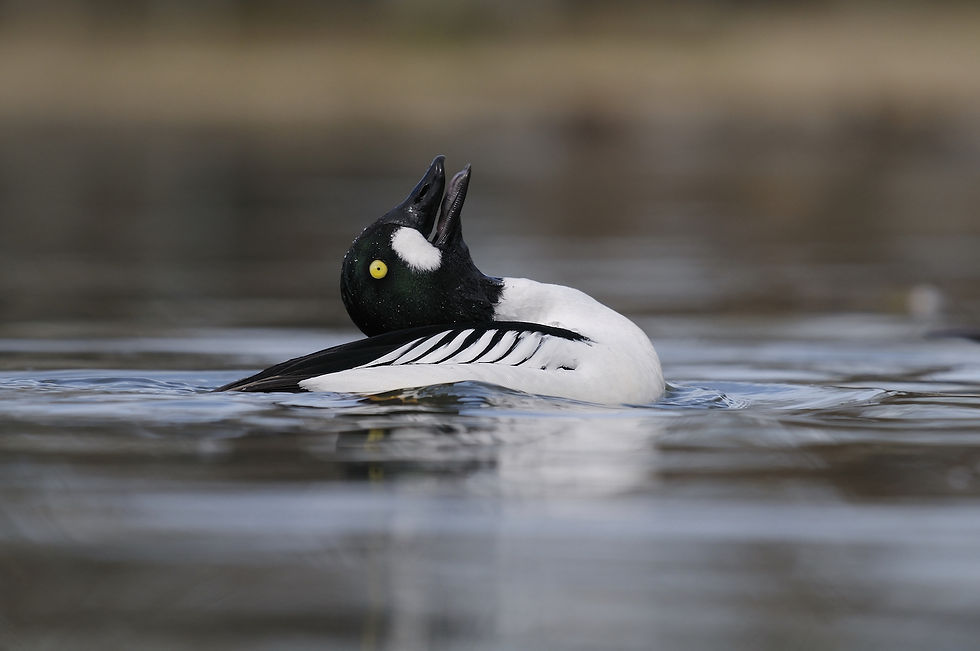
New: five goldeneyes.
Original: On the sixth day of Christmas, my true love gave to me: six geese a laying.
The forest preserves are a great place to bring kids, and the Canada goose takes this seriously. During the warmer months of the year, adult geese can be seen with families of two to 10 goslings. These sometimes-menacing birds are fierce parents, protecting their nests and their young for the first year, until the goslings complete the transition from tiny yellow fluffs to awkward adults to independent geese.

No change needed for this verse of the song.
Original: On the seventh day of Christmas, my true love gave to me: seven swans a swimming.
Here in Will County, you can spot three species of swan: trumpeter, mute and tundra. Mute swans, originally from Europe, are probably the swans mentioned in this song. You can tell them apart from the others by their bright orange bill. The trumpeter and tundra both have black bills.

No change needed for this verse of the song.
Original: On the eighth day of Christmas, my true love gave to me: eight maids a milking.
Did you know that some birds produce milk for their babies? Just a handful of birds in the world do this, including members from the Columbidae family, which includes pigeons and mourning doves. This crop milk or pigeon milk is produced by both parents to provide protein and fat to newly hatched squabs.

New: eight pigeons milking.
Original: On the ninth day of Christmas, my true love gave to me: nine ladies dancing.
The sandhill cranes and their mating dance are this gift. Cranes stretch their wings, pump their heads, bow and leap into the air in their unique courting dance. It must be an impressive dance, because these birds mate for life!
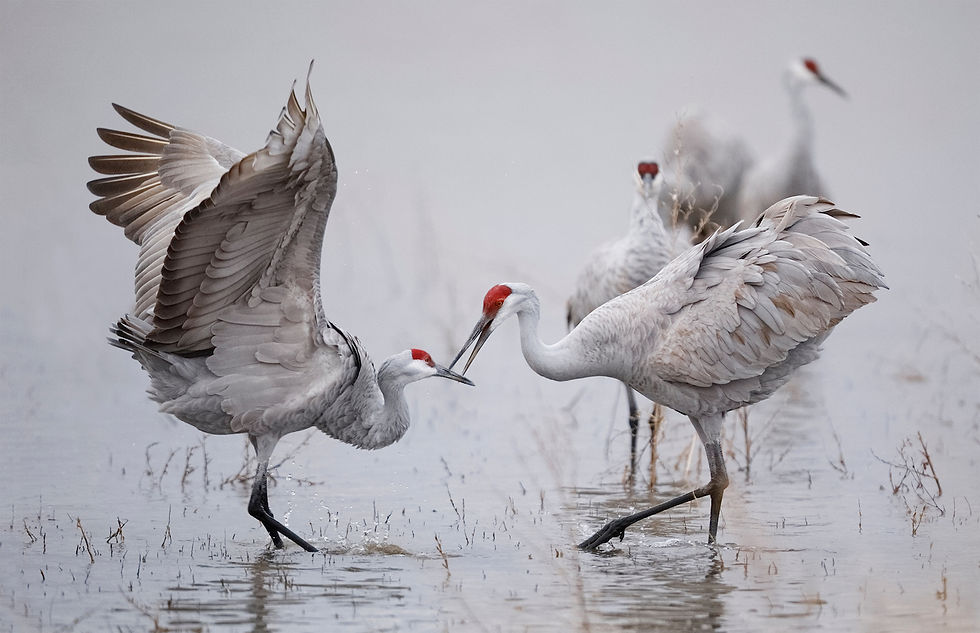
New: nine cranes dancing.
Original: On the 10th day of Christmas, my true love gave to me: 10 lords a leaping.
The belted kingfisher is found perched on branches above their watery feeding grounds. They feed by plunging headfirst into the water to capture small fish, crayfish and insects at impressive speeds.

New: 10 kingfishers leaping.
Original: On the 11th day of Christmas, my true love gave to me: 11 pipers piping.
Many birds here in Will County have melodic sounds. The eastern screech owl, with its high-pitched tremolo and whinny, can sound just like a flute or other musical instruments! Listen here.

New: 11 owls screeching.
Original: On the 12th day of Christmas, my true love gave to me: 12 drummers drumming.
Will County resident woodpeckers include the downy woodpecker, hairy woodpecker, northern flicker, pileated woodpecker, red-bellied woodpecker, red-headed woodpecker and yellow-bellied sapsucker. These birds use their sharp beaks to drum against trees, searching for food. And they are fast — drumming at 20 pecks a second. That adds up to between 8,000 and 20,000 pecks a day. Wow!

New: 12 woodpeckers drumming.


